Someone on your team has a 40-page contract and ten minutes.
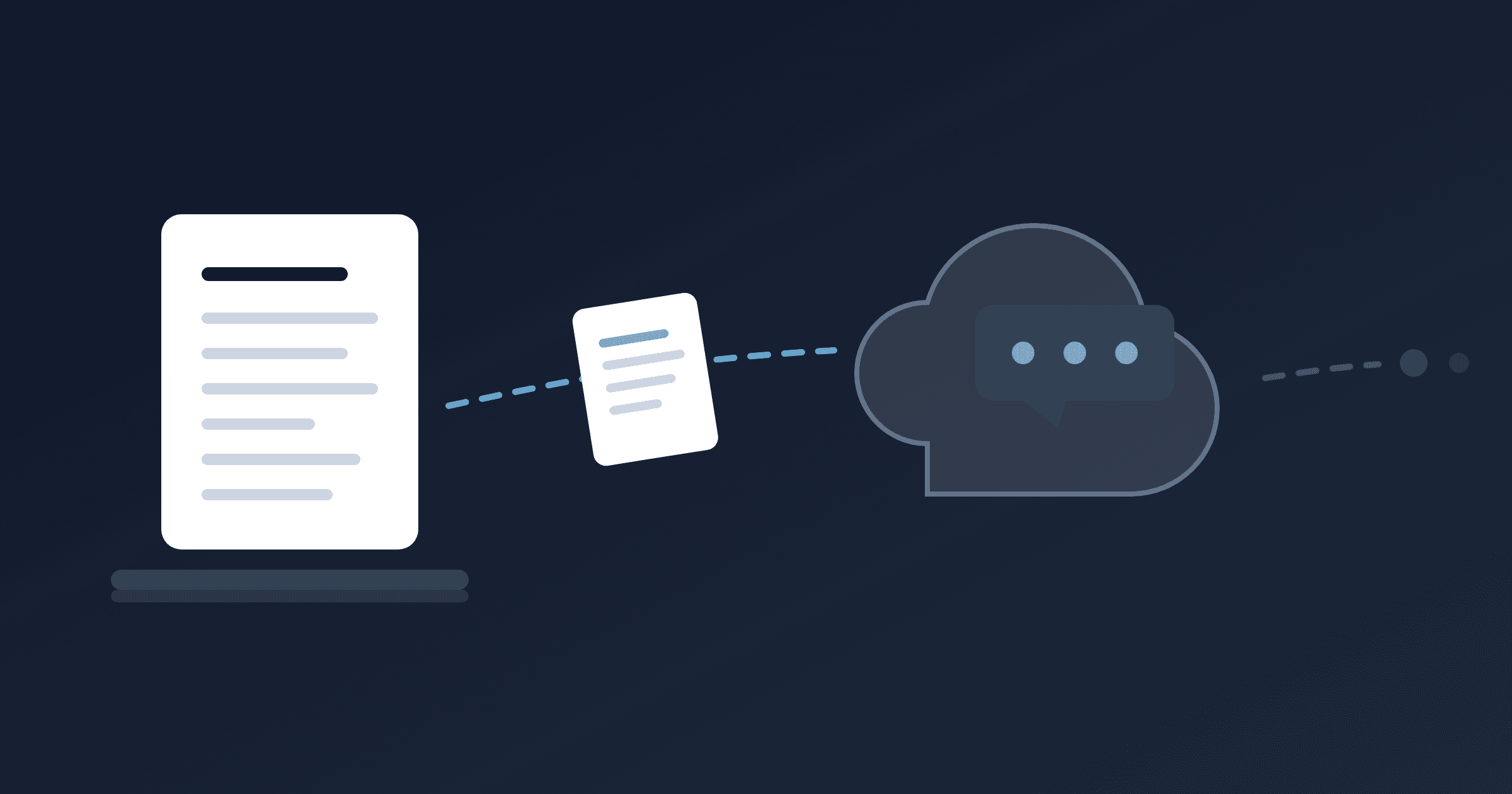
So they open a free AI website, paste the whole contract in, and ask what the termination clause says. They get a clear answer in about fifteen seconds. It saves them an hour.
Nothing bad happens that day. That is what makes this hard to talk about.
Where the file actually went
That contract is now on someone else's computer.
Depending on the account your employee used, it may be stored for a while. It may be readable by staff at that company. On a free plan, it may be used to help train the next version of the model. You cannot see which of those happened, and you cannot take the file back.
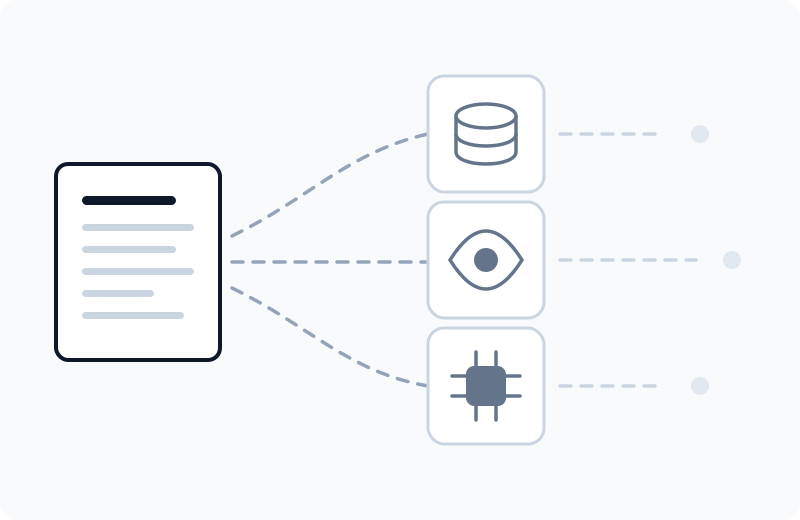
Now multiply that by every person in your office, every workday, for a year. Nobody did anything wrong. There was just never a rule, and there was never a better option sitting there.
Most businesses pick one of two bad options
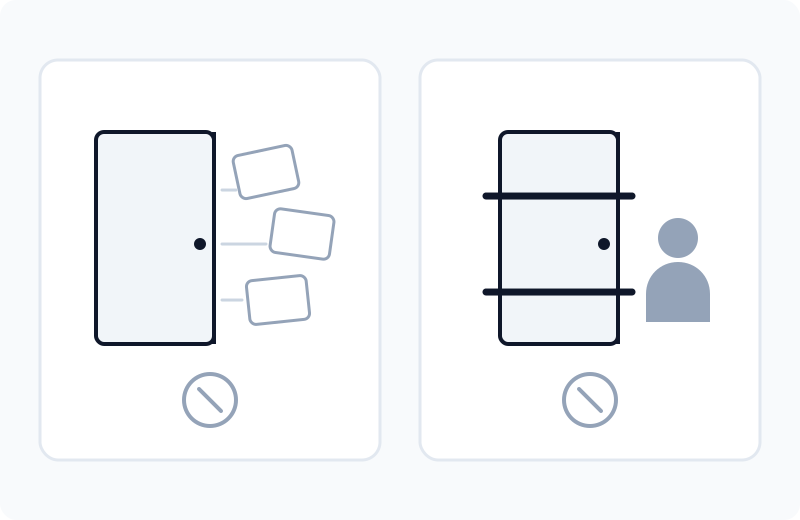
Option one is to let it happen. People use whatever AI site they like, with whatever files are on their screen. The work does get faster. You have no idea what left the building.
Option two is to ban it. You send an email saying no AI tools at work. Some people stop. Some people do the same thing on their phone at lunch. You now have the same risk, minus the ability to see any of it, and your team is slower than the business down the road.
Neither of those is a plan. They are just two ways of not deciding.
The third option is to keep the AI in the building
Here is the part most business owners have not been told: the AI does not have to live on the internet.
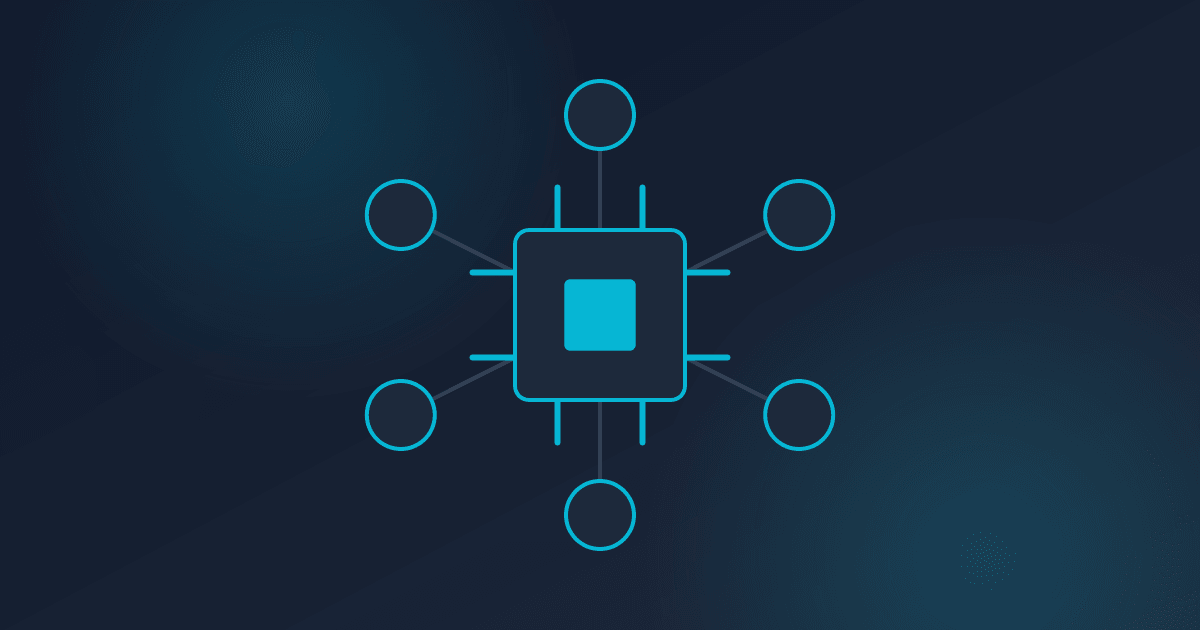
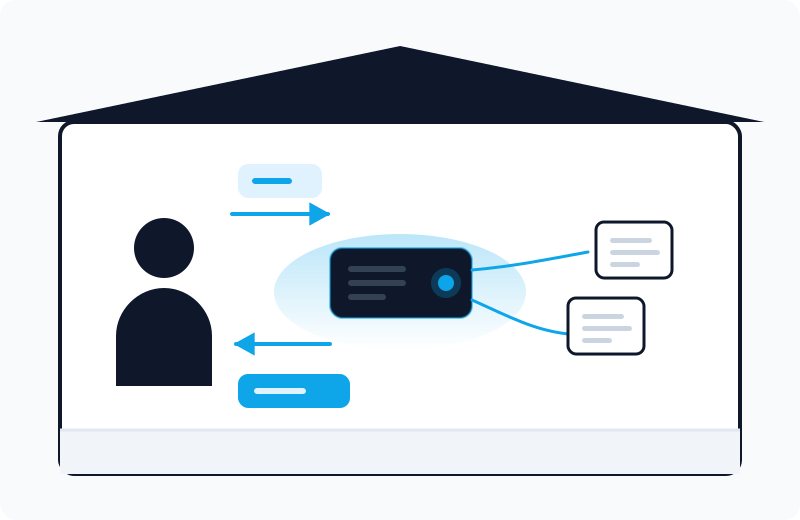
You can buy a computer, put it in your office, and run the AI on that. Your team asks it questions. It answers. The questions and the documents never leave your network.
This used to mean a server room, a rack, and a budget with a comma in it. It does not anymore. One machine about the size of a lunchbox can now run a genuinely useful AI model. It plugs into your network the way a printer does.
What it is good at
Being honest about the ceiling matters more than the sales pitch, so here is the real list. A model running on your own hardware handles this class of work well:
- Summarizing long documents
- Drafting emails, proposals, and first drafts
- Pulling details out of PDFs and invoices
- Answering questions about your own policies, contracts, and handbooks
- Cleaning up messy notes into something readable
That covers most of what an office actually asks AI to do. It is repetitive work, and it is valuable precisely because it is repetitive.
What it will not do is compete with the largest hosted models on hard, novel reasoning. If your business depends on that, you have a different problem and you should pay for the frontier. Most businesses do not.
What a normal Tuesday looks like
Your team opens a web page, the same way they open email. They type a question in plain words:
What did we quote this customer last spring?
Does our leave policy cover a partial day?
Which of these contracts renew before March?
They get an answer, along with the document it came from, so they can check it. The file never went anywhere. There is no per-person monthly bill, because you own the machine.
What it does not fix
A box in your office is not a policy. You still need to decide which documents go into it and who is allowed to see what. Someone on your team has to own it, the same way someone owns the phone system.
And it is still AI. It can be confidently wrong. Anything that matters still gets read by a person before it goes out the door. That is true of every AI tool, hosted or not.
How to tell if this fits you
You are probably a good fit if two or more of these are true:
- You handle customer records, contracts, or regulated information
- An insurer, a customer, or an auditor has asked how you use AI
- Your staff are already using AI tools, with or without permission
- The answers people need are buried in documents nobody can search
- You have said no to AI so far, and it is starting to cost you
If none of those are true, you may not need this yet. That is a fine answer too.
Where to start
Start with the work, not the hardware. Pick the one task that eats the most hours in your week and ask whether a careful assistant with access to your own files could do the first 80% of it.
If the answer is yes, the next question is just where that assistant lives.
We build these as a customer-owned appliance called ECGPT — you buy the box, we set it up in your office, and we train one of your people to run it. If you want to talk through whether it fits your business, tell us what you are trying to fix. If it is not a fit, we will say so.
Written by
Chris EdwardsPrincipal Consultant, Edwards Consulting Group
Chris Edwards is the principal consultant at Edwards Consulting Group, where he helps organizations reduce AWS spend, harden their cloud security posture, and put AI to work in production. He writes about cloud architecture, FinOps, cybersecurity, and practical AI integration drawn directly from client engagements.
More about Chris Edwards→