My son already uses AI. He talks to the local models running in our house the way I checked the weather as a kid. He asks, they answer, and none of it strikes him as remarkable. It is a normal part of how his world works, and honestly, he has a better grip on what these systems are than plenty of adults.
But everything AI does for him happens on a screen. The input is words, and the output is words. Useful words. Still words.
That is why a robot duck stopped me in my tracks this week.
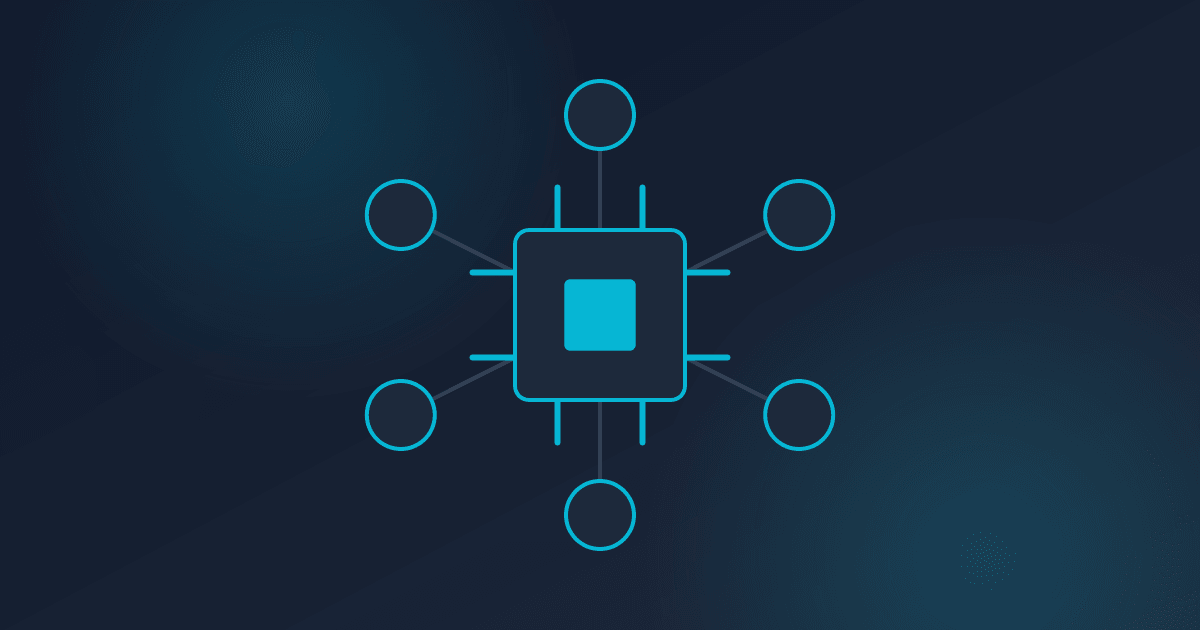
Pollen Robotics, the robotics arm of Hugging Face, just opened pre-orders for Microduck, a 25-centimeter, sub-800-gram biped robot that waddles, crouches, picks things up with an articulated beak, falls over, and gets back up on its own. It has 15 motors, a wide-angle camera, a tiny LiDAR sensor, two IMUs for balance, and NFC antennas in its head and beak. It roller skates. It costs $399 and ships before Christmas.
And the entire software stack, from the SDK to the physics simulator to the reinforcement learning pipeline, is open source.
The missing ingredient is physical
Think back to whatever hooked you on computers. For me it was LEGO bricks and bad BASIC programs. The common thread was never the technology itself. It was the loop: you change a thing, and something happens, and you watched it happen. The shorter and more visible that loop, the harder it pulls you in.
AI on a screen has a strange relationship with that loop. The response is instant, but the change is abstract. A better answer looks a lot like the last answer. There is nothing to point at across the room.
A robot closes that gap completely. When the AI gets better, the duck walks better. When the AI is confused, the duck is confused, in the middle of your kitchen, visibly. Success is not a paragraph. Success is a small machine waddling across the actual floor because of something you did.
That is instant gratification in the best sense of the term. Not the empty kind that ends when the screen turns off, but the kind that makes a kid say "again," and then, eventually, "what if we tried..."
Fun on day one, laboratory on day thirty
Microduck is playable out of the box. That matters more than it sounds. There is no six-weekend assembly project standing between a kid and the first moment of delight. It waddles on day one. It reacts. It can find and recognize its owner. It falls over and hauls itself back up, which is objectively the funniest thing a robot can do.
What comes after is the good part.
Because the stack is open, the same duck that entertains on day one becomes a laboratory on day thirty. The training loop works the way real robotics teams work: you teach a new behavior in an open-source physics simulator, watch a virtual duck attempt it a few thousand times, and then load the learned policy onto the physical robot standing on your floor.
Every round trip through that loop pays off in something you can see. The virtual duck falls a thousand times in fast forward. The real duck tries the new trick in front of you. It works, or it face-plants, and either way the result is standing right there, and the next attempt is one tweak away.
No lecture required. The loop is the lesson.
Built to be opened, not returned
The other detail that won me over is the box itself. Microduck ships with spare motors, spare cables, two batteries, a screwdriver, and a screw pack.
Read that again. The manufacturer assumes the robot will break, and equips you to fix it.
Almost everything else in a kid's life is a sealed appliance. When it breaks, it is garbage or it is a warranty claim, and either way the lesson is that the insides are not your business. A toy that arrives with its own screwdriver teaches the opposite: the insides are exactly your business. Take it apart. Swap the motor. Put it back together.
The kit also includes NFC tags, which pair with the antennas in the duck's head and beak. Scatter tags around the house and the robot can recognize places and objects. A kid can, in a very real sense, set up their own home so their own robot understands it. That is the same hands-on cause and effect as the training loop, applied to the space they live in.
Fun first, curriculum never
I want to be careful here, because there is a failure mode. The fastest way to kill a kid's interest in anything is to turn it into a curriculum. Microduck works precisely because it does not feel like one. It is a duck. It waddles. It roller skates.
The learning is smuggled in behind the fun, the way the best learning always is. The kid thinks they are teaching a duck to do a trick. Along the way they are absorbing how training actually works: define the goal, practice in simulation, try it for real, watch it fail, adjust, repeat. Nobody has to explain any of that. The duck demonstrates it, on the floor, every time.
Why I ordered one
So yes, I pre-ordered a Microduck. Officially it is for my son, who is in elementary school and who, as of this writing, does not know it is coming.
Unofficially, it is for both of us. He already knows what AI can do with words. What I want him to have is the other half: AI he can watch, chase, pick up, repair, and teach. The moment when a behavior he trained finally clicks and the real duck does the thing the pretend duck learned. That moment does not happen on a screen, and I think it is the moment that sticks.
Delivery is promised before Christmas. Somewhere between the waddling and the roller skates and the inevitable teardown on the living room floor, we are going to learn a lot.
I cannot wait to see what we build together.
Written by
Chris EdwardsPrincipal Consultant, Edwards Consulting Group
Chris Edwards is the principal consultant at Edwards Consulting Group, where he helps organizations reduce AWS spend, harden their cloud security posture, and put AI to work in production. He writes about cloud architecture, FinOps, cybersecurity, and practical AI integration drawn directly from client engagements.
More about Chris Edwards→