The DR Conversation Nobody Wants to Have
Disaster recovery planning is like insurance - nobody wants to think about it until they need it. And by then, it's too late to plan.
The good news is that AWS makes DR significantly more accessible than traditional on-premises approaches. The challenge is choosing the right strategy. Over-engineering your DR adds unnecessary cost. Under-engineering it means you're not actually protected.
Here are four strategies, ranked from least expensive to most expensive, with clear guidance on when each one makes sense.
Strategy 1: Backup and Restore
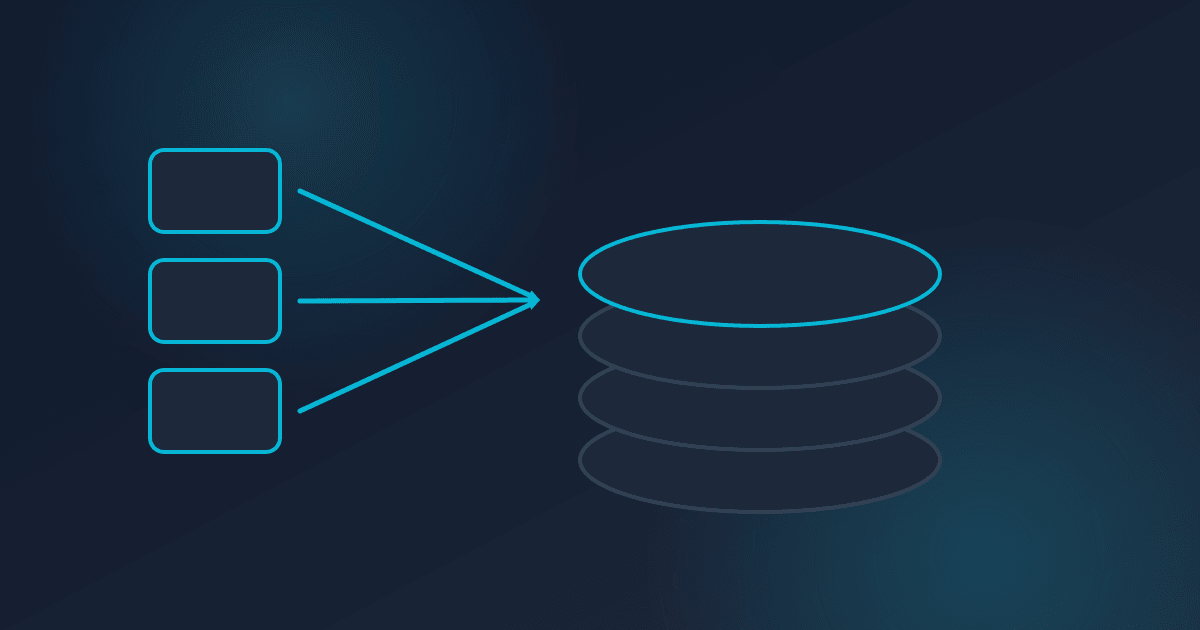
How it works: You regularly back up your data to another region. In a disaster, you provision new infrastructure and restore from backups.
Recovery Time Objective (RTO): Hours to days Recovery Point Objective (RPO): Hours (depends on backup frequency) Relative cost: $ (lowest)
What you need:
- Automated backups of databases (RDS snapshots, DynamoDB backups)
- S3 cross-region replication for critical data
- Infrastructure-as-code templates (CloudFormation or Terraform) ready to deploy
- Documented restore procedures
Best for: Non-critical workloads, development environments, applications where hours of downtime are acceptable. Also works as a baseline layer under more aggressive strategies.
The catch: Your RTO is limited by how long it takes to provision infrastructure and restore data. For a large database, this could be hours. You need to actually test the restore process - an untested backup is not a backup.
Strategy 2: Pilot Light
How it works: You keep a minimal version of your environment running in a secondary region at all times. Core components - typically databases - are replicated continuously. In a disaster, you scale up the remaining infrastructure.
RTO: Minutes to hours RPO: Minutes (continuous replication) Relative cost: $$ (moderate)
What you need:
- Cross-region database replication (RDS read replicas, DynamoDB Global Tables)
- AMIs or container images pre-built and available in the DR region
- Auto-scaling configurations ready to activate
- DNS failover configuration (Route 53 health checks)
Best for: Business-critical applications that can tolerate 30-60 minutes of downtime. This is the sweet spot for most mid-size companies - it provides meaningful protection without the cost of keeping a full environment running.
The catch: The "scale up" step is where things can go wrong. You need to test that your secondary region can actually handle production traffic. Capacity limits, missing configurations, and untested scaling can all extend your actual RTO beyond what you planned.
Strategy 3: Warm Standby
How it works: A scaled-down but fully functional copy of your environment runs in a secondary region at all times. In a disaster, you scale it up to handle full production traffic.
RTO: Minutes RPO: Seconds to minutes Relative cost: $$$ (significant)
What you need:
- Full application stack running in a secondary region (at reduced capacity)
- Active database replication with near-zero lag
- Load balancers and health checks configured for both regions
- Automated scaling procedures that can be triggered quickly
Best for: Applications where downtime directly costs money - e-commerce platforms, SaaS products with SLA commitments, financial services. The warm standby is already serving traffic or ready to serve traffic within minutes.
The catch: You're paying for infrastructure in two regions. The standby region typically runs at 10-30% of production capacity, so costs are meaningful. You also need to ensure the standby stays in sync with production - configuration drift is the silent killer of warm standby strategies.
Strategy 4: Multi-Site Active-Active
How it works: Your application runs at full capacity in two or more regions simultaneously. Traffic is distributed across regions. If one region fails, the others absorb the traffic.
RTO: Near-zero (seconds) RPO: Near-zero (synchronous or near-synchronous replication) Relative cost: $$$$ (highest)
What you need:
- Full production capacity in multiple regions
- Global load balancing (Route 53, CloudFront, Global Accelerator)
- Multi-region data replication with conflict resolution
- Application architecture that handles eventual consistency
Best for: Mission-critical applications where any downtime is unacceptable - financial trading platforms, healthcare systems, global SaaS products. If your business loses significant revenue per minute of downtime, this is the strategy.
The catch: This is the most expensive and most complex option. Multi-region data consistency is a hard engineering problem. Your application must handle the possibility of reading stale data, resolving write conflicts, and managing distributed transactions. This is an architectural decision, not just an infrastructure decision.
How to Choose
Start with your business requirements, not the technology:
- What does downtime cost? Calculate the per-hour cost of being offline - lost revenue, SLA penalties, regulatory consequences, reputation damage.
- What data loss is acceptable? Can you lose the last hour of transactions? The last minute? Nothing?
- What's your budget? DR is an insurance policy. The premium should be proportional to the risk.
For most mid-size companies, the answer is Pilot Light or Warm Standby. Backup and Restore is too slow for production workloads. Multi-Site Active-Active is overkill (and too expensive) unless downtime is genuinely catastrophic.
Common Mistakes
Never testing failover. A DR plan that has never been tested is a hope, not a plan. Schedule quarterly DR tests. Actually fail over to your secondary region and run there for a defined period.
DR plan that exists only on paper. If your DR procedure is a 40-page document that requires manual steps, it will fail under the pressure of an actual incident. Automate as much as possible and keep manual steps minimal and well-practiced.
Assuming AWS handles everything. AWS provides the building blocks, but you're responsible for the architecture, configuration, and testing. A multi-AZ RDS deployment gives you high availability within a region - it does not protect you from a region-level failure.
Ignoring dependencies. Your application might be in two regions, but what about your DNS provider, your authentication service, or your payment processor? Map all critical dependencies and ensure they have their own redundancy.
Getting Started
If you don't have a DR strategy today, start here:
- Identify your most critical workload
- Calculate the business cost of an hour of downtime
- Implement automated backups with cross-region replication (this is table stakes)
- Build infrastructure-as-code for your recovery region
- Test a full restore at least once
Then work your way up to Pilot Light or Warm Standby as your budget and requirements dictate.
If you need help designing a disaster recovery strategy that balances cost and protection, we can evaluate your current architecture and recommend the right approach.
Written by
Chris EdwardsPrincipal Consultant, Edwards Consulting Group
Chris Edwards is the principal consultant at Edwards Consulting Group, where he helps organizations reduce AWS spend, harden their cloud security posture, and put AI to work in production. He writes about cloud architecture, FinOps, cybersecurity, and practical AI integration drawn directly from client engagements.
More about Chris Edwards→